


The Definition of Die Casting
Die Casting is a kind of metal casting process. Its core feature is to apply high pressure to the molten metal in the mold cavity, so that the metal fills the cavity under pressure and cools rapidly to form, thereby producing high-precision and highly complex metal parts. It is an indispensable component forming technology in modern manufacturing, especially in the automotive and electronics industries.
Get A QuoteThe Core Value of Die Casting: From Two Aspects
We can understand it from two dimensions. Manufacturers (suppliers) and product users (demanders) : It is not merely "casting" itself, but a systematic engineering solution that has created an irreplaceable comprehensive advantage for modern manufacturing.
I. Core values for manufacturers (Suppliers) : Scale efficiency and cost advantage
1. Unparalleled production efficiency
· High-speed cycle: The production time for a single piece is measured in seconds, and the annual output of a single die-casting machine can reach hundreds of thousands or even millions of pieces.
· High automation: The entire process from smelting, injection molding to part picking and spraying is fully automated and integrated, achieving 7x24-hour continuous production and significantly reducing reliance on manual labor and costs.
2. Outstanding economy (under the premise of large volume
· Extremely low unit cost: Although the initial investment in the Die is huge, once it goes into mass production, its cost is spread over a vast number of parts, making the unit manufacturing cost extremely low.
· High material utilization rate: The gates, runner channels, and waste products generated can be 100% recycled and remelted, with minimal material loss.
· Reduce subsequent processing: The near-net forming capacity reduces a large number of secondary processing procedures such as cutting and grinding, saving equipment and working hours.
2. Core values for the product and end users (demand side) : Performance and design freedom
1.Achieve a high degree of integration of complex functions
It can form parts with complex geometric shapes, thin walls, fine textures and internal structures in one go, integrate multiple components into a single die-cast part, reduce assembly processes, and enhance the overall structural strength and reliability of the product. This is its most core engineering value.
2. Excellent dimensional accuracy and consistency
Through precise molds and highly controllable processes, die-castings possess excellent dimensional stability and interchangeability, providing a reliable guarantee for modern assembly lines and serving as the foundation for high-quality large-scale manufacturing.
3. Superior mechanical properties and surface quality
Solidification under high pressure makes the casting structure dense, with high strength and hardness.
The surface of the casting is smooth and can be directly subjected to various aesthetic surface treatments (such as spraying, electroplating, anodizing, etc.), meeting the appearance requirements of consumer electronic products.
4. Promote lightweighting and sustainable development
It mainly uses lightweight materials such as aluminum alloy and magnesium alloy, and is a key technology for achieving weight reduction and energy conservation in transportation vehicles, especially electric vehicles.The materials are recyclable and in line with the concept of green manufacturing.
The Basic Process Flow of Die Casting
1. Mold closing: After cleaning the mold and spraying the mold release agent, lock the two parts of the mold under high pressure to form a sealed cavity.
2. Injection: Molten metal is filled into the mold cavity at an extremely fast speed and high pressure through an injection system.
3. Pressure holding and cooling: After injection, maintain the pressure to compensate for the shrinkage of the metal during solidification, while the mold cools to solidify the casting.
4. Mold opening: After the casting has initially cooled and solidified, separate the two parts of the mold.
5. Ejection: The ejector pin mechanism inside the mold operates to automatically push the formed casting out of the mold.
6. Post-treatment: Remove excess materials such as gates and flash, and carry out grinding, shot blasting, machining and other treatments to obtain the finished product.
2. The Main advantages and disadvantages of Die Casting
· Advantages:
· High efficiency: Fast production rhythm and high degree of automation.
· High precision and complexity: Capable of manufacturing parts with threads, inserts, and complex internal structures.
· Excellent surface quality: The surface of the casting is smooth and can usually be used directly or only requires a small amount of processing.
· High material utilization rate: The gate and waste can be remelted and reused.
· High strength: Solidifies under pressure, with a dense structure and excellent mechanical properties.
· Disadvantages:
· Huge initial investment: The cost of molds is extremely high.
· Only suitable for large-scale production: to spread out the high mold costs.
· Material limitations: Limited to specific non-ferrous metal alloys, not suitable for high-melting-point metals such as iron and steel.
· Possible porosity: High-speed filling may entrap air, affecting the compactness and heat treatability of the parts (but this can be improved through techniques such as vacuum die-casting).

Anxin’s Ability in Die Casting
1. Full-process solution, focusing on the core
One-stop service: We offer a complete vertically integrated supply chain, covering mold design and manufacturing, precision die-casting, CNC finishing, surface treatment (such as spraying and anodizing), and final assembly. You don’t need to manage multiple suppliers, making communication more efficient, responsibilities more unified, and delivery dates more guaranteed.
2. Technical strength and R&D support
· Advanced technological capabilities: We employ real-time controlled die-casting machines, equipped with advanced processes such as vacuum die-casting and local extrusion, which can effectively reduce porosity, enhance the density and mechanical properties of castings, and meet the demands of high-demand structural components.
.Molds are our core competitiveness: we have a senior mold design team and high-precision mold processing centers. We not only manufacture molds, but also focus on optimizing the pouring and discharging system to ensure product quality from the source, improve yield and extend the service life of molds.
· Materials Science Support: Proficient in the properties of various materials such as aluminum alloys, zinc alloys, and magnesium alloys, we can provide professional material selection and optimization suggestions based on your product performance (such as strength, thermal conductivity, corrosion resistance), cost, and process requirements.
3. Large-scale and flexible production capacity
· Scale and Efficiency: With a cluster of die-casting islands ranging from medium and small tonnage to large tonnage, we can not only handle large orders but also reduce costs and ensure stable supply through large-scale production.
· Flexible response: Meanwhile, we possess rapid mold change (SMED) capabilities and flexible production lines, which can efficiently handle the trial production and order demands of small and medium-sized batches and multiple varieties, facilitating the rapid iteration and market launch of your new products.
4. Cost optimization and value co-creation
· Comprehensive cost advantage: With process optimization, high yield rate and full-process independent production, we can provide you with a competitive overall cost while ensuring quality.
· Value Engineering Services: We are not only manufacturers but also partners. Our engineering team is willing to get involved early (ESI), providing manufacturability analysis (DFM) from the product design stage to help optimize the structure, reduce material usage, simplify the process, and help you reduce costs and increase efficiency.

Material Selection on Die Casting
1. Aluminum alloy (the most commonly used and having the highest proportion)
Aluminum alloy is the most widely used and important material in die-casting processes, perfectly balancing performance, weight and cost.
· Common grades:
· ADC12 (A383) : The most commonly used die-casting aluminum alloy, with balanced castability, mechanical properties and corrosion resistance, is often used in automotive and electronic housings.
· A380: Its strength and heat resistance are slightly better than those of ADC12, and it has excellent fluidity. It is widely used.
· ADC10 (A360) : It has particularly good corrosion resistance and air tightness, making it suitable for thin-walled parts with high requirements.
· AlSi9Cu3 (similar to A380) : A commonly used grade in Europe, it has excellent comprehensive performance.
2. Zinc alloy
The die-casting performance of zinc alloy is almost the best among all metals, making it suitable for manufacturing very precise, thin-walled and structurally complex parts.
· Common grades:
· Zamak 3 (Most commonly used) : It features excellent fluidity and mechanical properties, and is the most versatile.
· Zamak 5: It has a higher copper content, and its strength and hardness are superior to Zamak 3, but its dimensional stability is slightly inferior.
· ZA-8: With a high aluminum content, it has better strength and creep resistance, and can be used at higher temperatures.
3. Magnesium alloy
Magnesium alloy has the lowest density among all structural metals and is the choice for those pursuing ultimate lightweighting.
· Common grades:
· AZ91D: The most commonly used die-casting magnesium alloy, it features excellent strength, corrosion resistance and casting performance.
· AM60B, AM50A: They have better ductility and toughness and are often used in automotive seat frames, steering wheels and other structures that require energy absorption.
4. Copper alloys (Brass)
Copper alloy die casting is mainly used in situations that require special properties (such as electrical conductivity, thermal conductivity, corrosion resistance, and antibacterial properties), but due to its high melting point and large mold wear, the cost is relatively high.
· Common grades: mainly brass (copper-zinc alloy), such as CZ132, etc.
Check Out the Toolkit

Key Application Industries
1. Automotive industry (the largest application field
· Powertrain: Engine block, cylinder head, oil pan, transmission housing, clutch housing.
· Structural and safety components: Battery pack casings, motor casings, electronic control boxes, and structural brackets (subframes, etc.) for new energy vehicles.
· Chassis system: Steering gear housing, braking system components (such as calipers, master cylinders).
· Interior and exterior: door handles, instrument panel brackets, center console frame, wheels, decorative strips.
2. Consumer electronics
· Shells and structural components: notebook computer shells, mobile phone frames/stands, tablet computer shells, camera bodies, smartwatch shells.
· Internal components: heat sink, shielding cover, connector, hinge (such as notebook hinge).
· Features: Mainly made of magnesium and aluminum alloy, it meets the requirements of lightness, thinness, heat dissipation, electromagnetic shielding and strength.
3. Aerospace and National Defense
· Aircraft components: engine blades, helicopter transmission system housings, aviation instrument housings, seat parts, unmanned aerial vehicle fuselage structural components.
· Spacecraft and missiles: Navigation equipment shells, satellite components.
4. Industrial Equipment and Mechanical manufacturing
· Power tools: housings and gearboxes of electric tools and pneumatic tools (such as housings of electric drills and Angle grinders).
· Pumps, valves and hydraulic components: pump body, valve body, compressor housing, hydraulic joints.
·Textile and food machinery: frames, gears, bearing housings.
5. Medical equipment
· Diagnostic equipment: Slip rings, stents, and X-ray machine parts in imaging equipment such as CT and MRI.
· Treatment equipment: components of operating tables, housings of ventilators, shells of dental equipment, structural parts of medical robots.
Die Casting Frequently Asked Questions (FAQs)
Die casting vs. injection molding?
expand_less expand_moreA: Metals for die-casting (high strength and good thermal conductivity), plastics for injection molding (light and insulating). Die casting has higher pressure/temperature and more expensive molds.
What are the key points in die-casting part design?
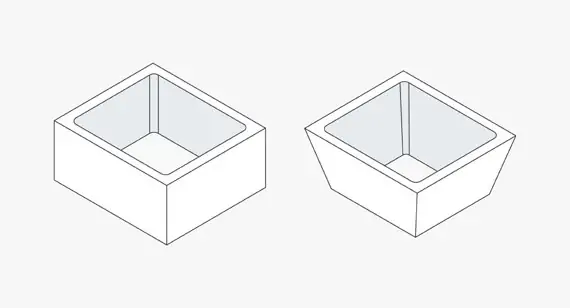
expand_less expand_moreA: Uniform wall thickness, add draft Angle, avoid sharp corners (use rounded corners), and simplify the structure to reduce mold complexity.
How long is the service life of a die-casting mold (mold base)?
expand_less expand_moreA: Aluminum/magnesium alloy molds: approximately 500,000 to 1,000,000 times; Zinc alloy molds: Can reach over one million times. It depends on the materials, design and maintenance.
What is "integrated die casting"?
expand_less expand_moreA: A cutting-edge trend in automotive manufacturing: Using super-large die-casting machines to form body components (such as the rear floor), which were originally composed of dozens of parts, in one go significantly reduces weight, lowers costs, and enhances production efficiency.
Can die-castings be heat-treated or welded?
expand_less expand_moreA: Be cautious. There may be pores inside traditional die-castings, which may cause the parts to expand or have defects during heat treatment or welding. Structural components produced by special processes (such as vacuum die-casting and high-density die-casting) can undergo subsequent processing.

Get an online quote and injection molding design analysis today.